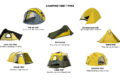
Camping tents have changed a lot over the years. Long ago, there were only a few basic designs — dome, A-frame, teepee, and tunnel tents. But today, you can find many more types, each made for different camping needs. Some tents are better for windy places, while others are perfect for big families or easy weekend trips.
Let’s look at 8 common types of tents, what they’re good for, and what things to keep in mind before choosing one.
1. Dome Tent
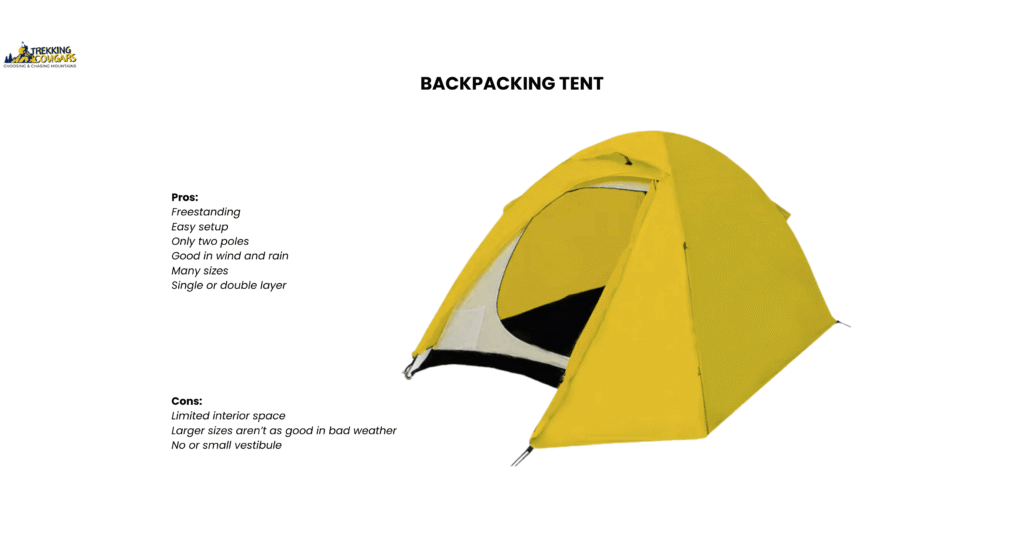
Best for: Most weather, car camping, backpacking Dome tents are one of the most popular types. They have two poles that cross each other to form a curved shape. Because of this design, they stand strong against the wind and let rain slide off easily. They are simple to set up, light, and come in many sizes. But their rounded walls mean you don’t get much standing space inside.
Good: Easy to pitch, stable in wind and rain, freestanding Not good: Less headroom; large sizes may wobble in strong wind
2. Tunnel Tent
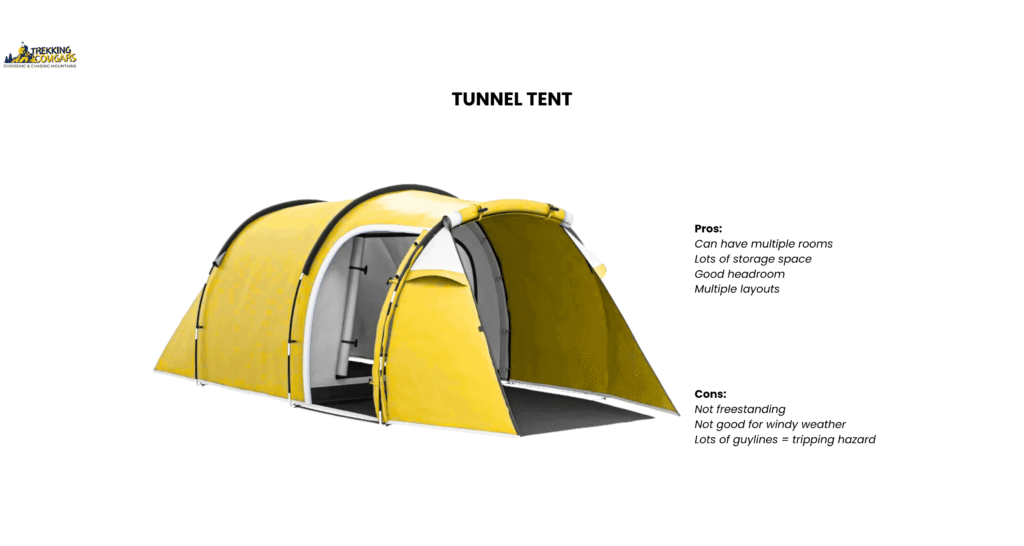
Best for: Family trips, calm weather camping Tunnel tents have curved poles that form a tunnel-like shape. They give you good height and lots of space, often with different sleeping rooms. They’re easy to assemble but must be tied down firmly, so they don’t work well in wind or on rocky ground.
Good: Spacious, tall, good layout options Not good: Not freestanding, weak in wind, many ropes to trip on
3. Cabin Tent
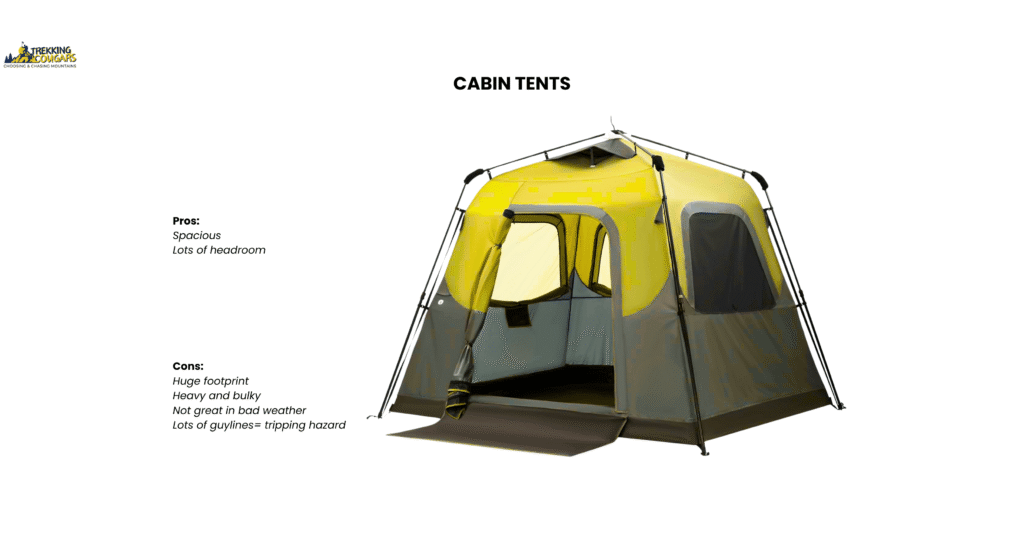
Best for: Large groups and family camping Cabin tents look like small houses with tall, straight walls. You can stand up easily inside and even use a folding bed. They’re big and comfortable but take time to set up and need lots of space. Strong winds can shake them badly.
Good: Big and roomy, tall ceiling Not good: Heavy, bulky, not stable in rough weather
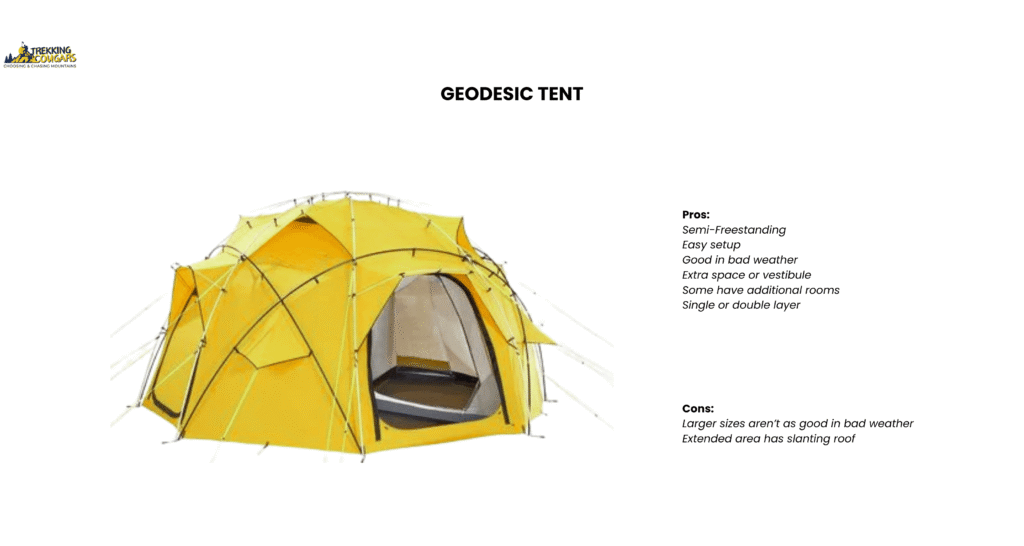
4. Geodesic Tent
Best for: Harsh weather, mountain, or winter camping These tents have several poles crossing each other, which makes them super strong. Their round design helps them resist wind, snow, and rain. They are great for extreme conditions, but can be tricky to set up and often cost more.
Good: Very stable, weatherproof, freestanding Not good: Pricey, complex to pitch
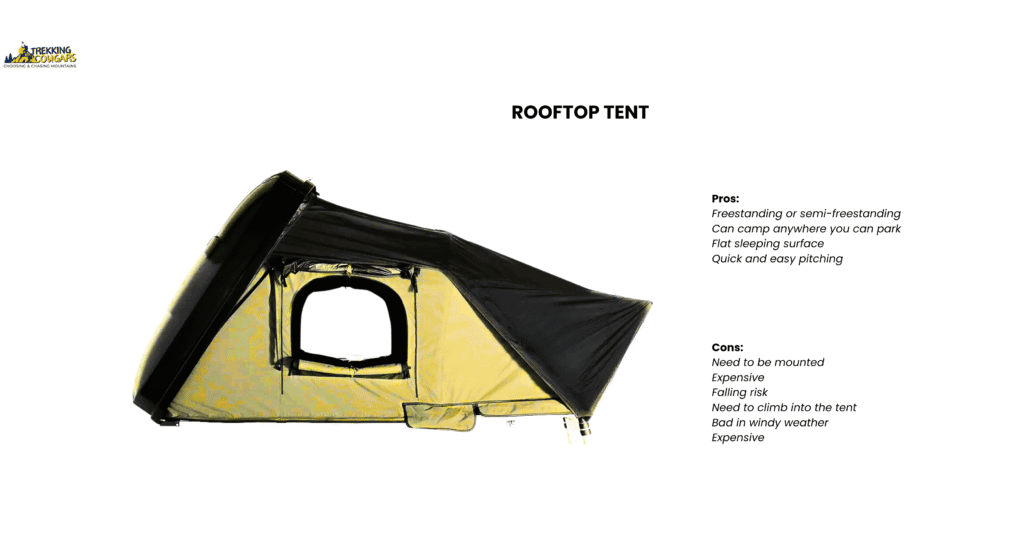
5. Rooftop Tent
Best for: Road trips and overlanding These tents sit on top of your car. You open or unfold them when needed and climb up using a ladder. They give you a flat, dry place to sleep and are quick to use once installed. But they are expensive and not great in strong winds.
Good: Camp anywhere you can park, quick setup Not good: Costly, need to climb, bad in wind, not for kids
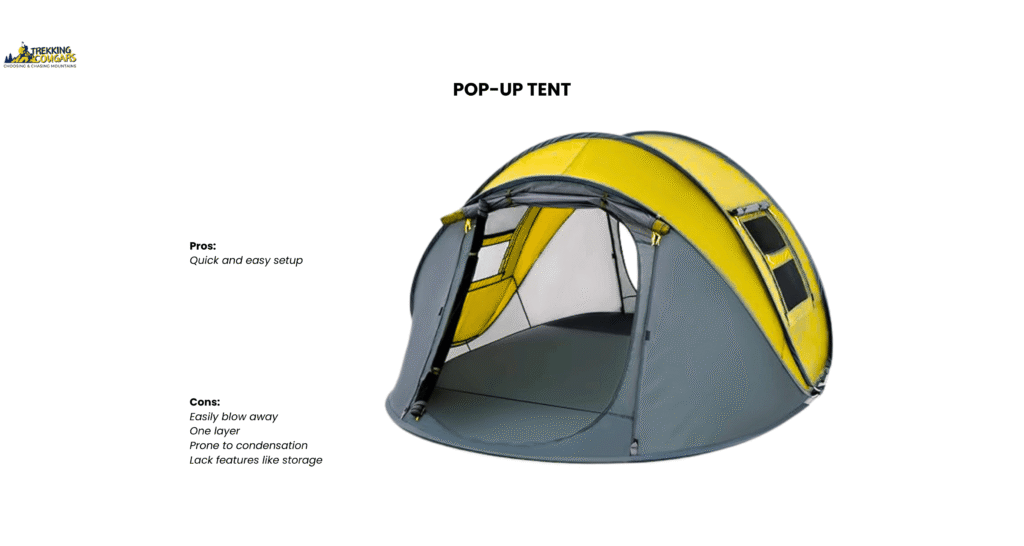
6. Popup Tent
Best for: Festivals, beach trips Popup tents spring into shape as soon as you open them — no poles or hard setup. They’re super convenient but not reliable in bad weather. They can blow away in the wind and often trap moisture inside.
Good: Fastest to set up Not good: Weak, poor ventilation, not for windy or rainy places
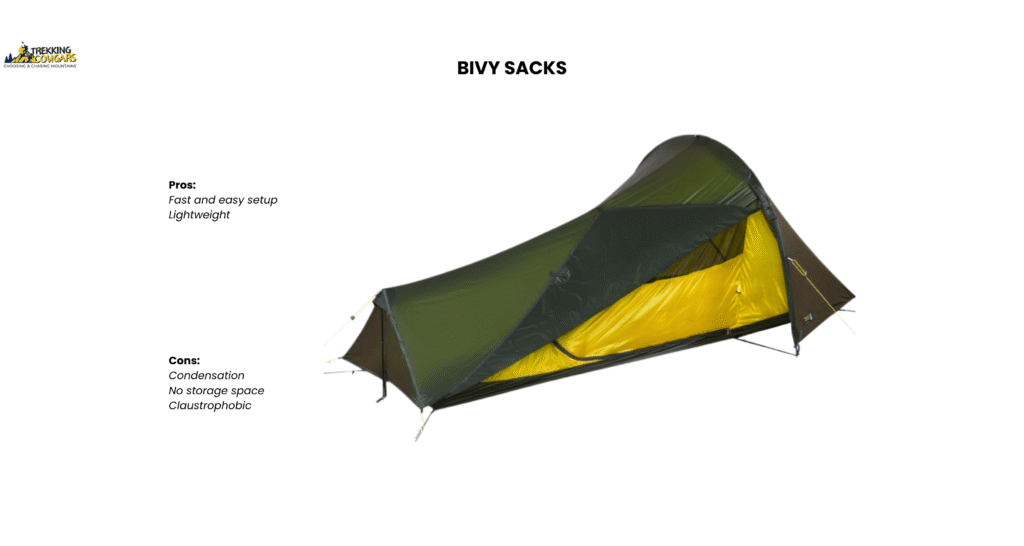
7. Bivy Sack
Best for: Solo travelers, bikers, ultralight backpacking A bivy sack is like a sleeping bag with a waterproof cover. Some have tiny poles to keep the fabric off your face. They are light, small, and quick to set up, but not very comfortable. You can’t store gear inside, and condensation can be a problem.
Good: Compact, light, quick setup Not good: Tight space, no storage, moisture build-up
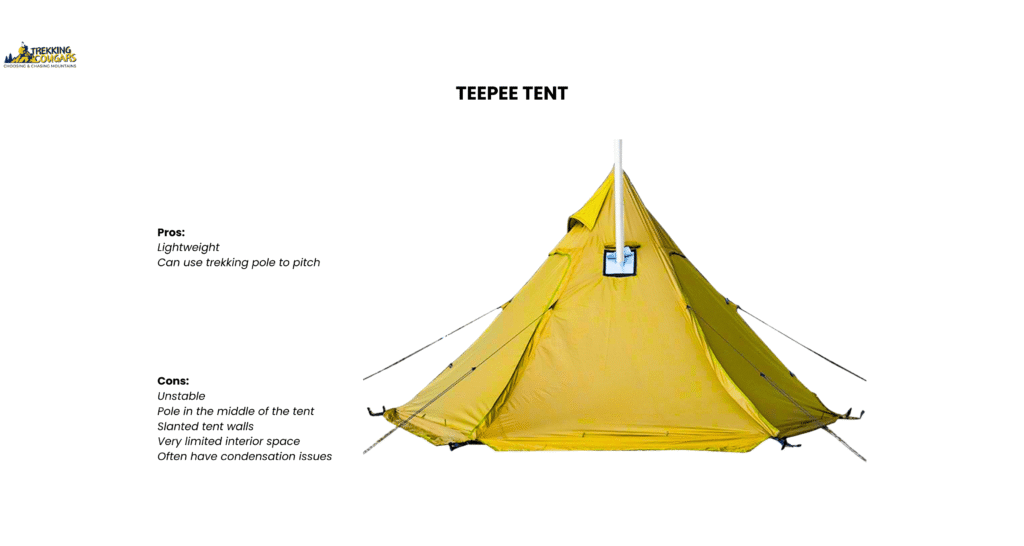
8. Teepee or Pyramid Tent
Best for: Lightweight backpacking These tents have one pole in the centre and fabric stretched out around it. You can even use a trekking pole as the support. They’re simple and light but have very little headroom, and the centre pole takes up space inside.
Good: Lightweight, easy to carry Not good: Cramped, unstable, condensation issues
Final Thoughts
Choosing the right tent depends on how and where you plan to camp.
For easy weekend camping, go with a dome or extended dome.
For family trips, try a cabin or tunnel tent.
For wild weather — pick a geodesic design.
For solo travellers, bivy sacks or teepee tents work best.
No matter which one you choose, make sure it fits your trip, weather, and comfort needs — because a good tent can make your camping trip truly enjoyable.
World-class trekking and hiking experiences in Uttarakhand are no longer just a tourism aspiration. They are now a central pillar of India’s... Read More
Ladakh’s rugged landscapes, cobalt skies, and serene monasteries have made it a magnet for adventurers and Instagram enthusiasts alike. But exploring this... Read More

 by
by 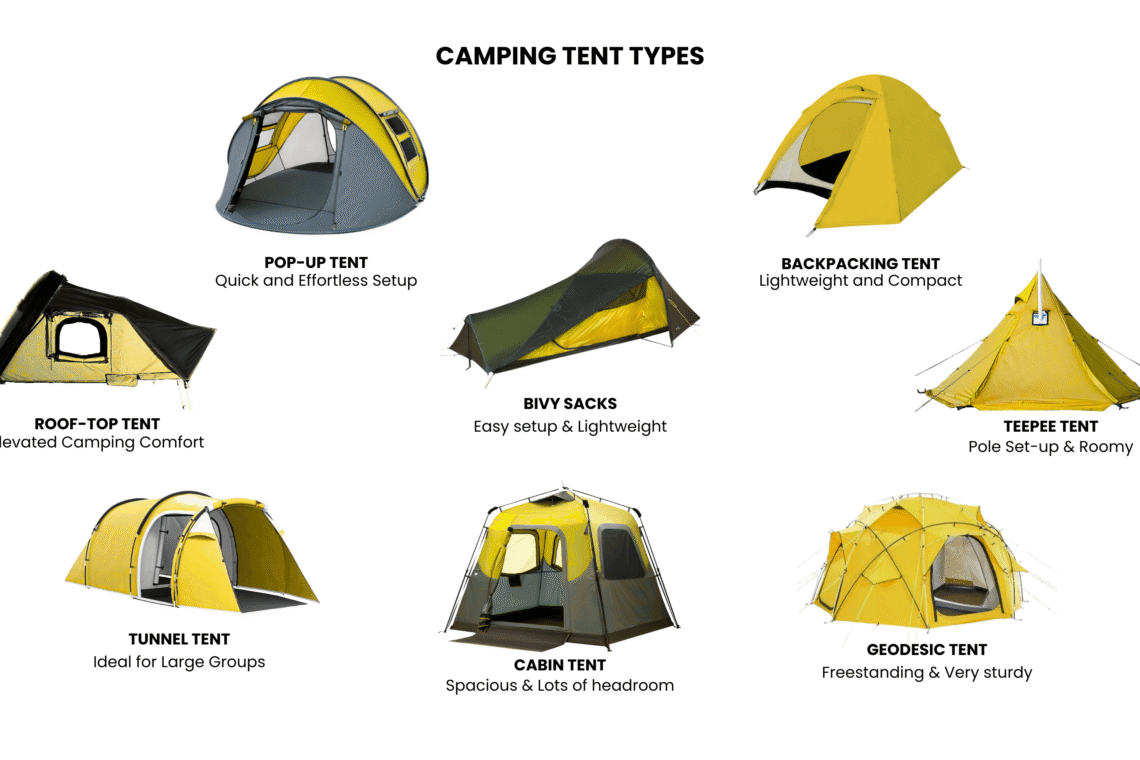




Join The Discussion