

How Difficult is the Gaumukh Tapovan Trek?
- November 1, 2025
- Blog
The Gaumukh Tapovan trek is one of the most breathtaking journeys in the Himalayas. Here, the mountains don’t just stand tall in... Read More
 by trekkingcougars
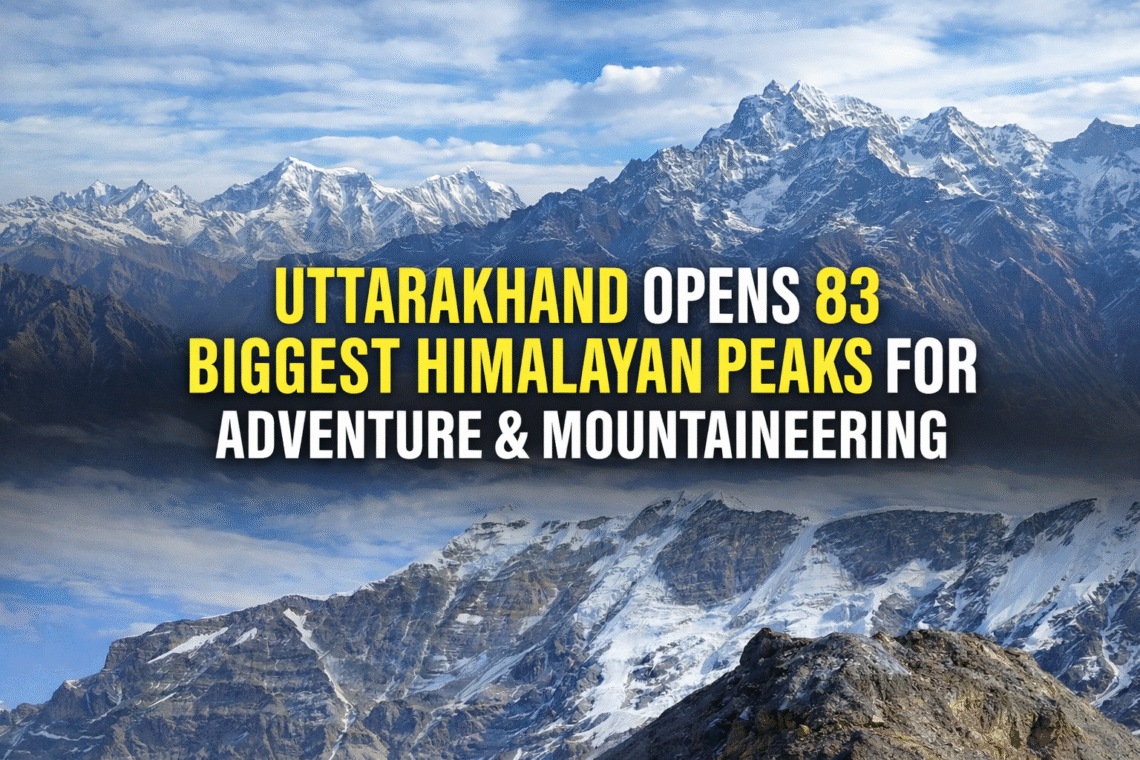
World-class trekking and hiking experiences in Uttarakhand are no longer just a tourism aspiration. They are now a central pillar of India’s emerging mountain economy. The recent announcement by the Uttarakhand Government to open 83 new Himalayan peaks for mountaineering, combined with the Union Budget 2026–27’s focus on adventure tourism, signals a structural shift in how India values its high-altitude landscapes.
For decades, trekking and mountaineering in India were treated as niche pursuits. Today, policy, infrastructure, and economic intent are aligning to position Uttarakhand as a global hub for serious alpine activity.
One of the biggest constraints on world-class trekking and hiking experiences in Uttarakhand has historically been bureaucratic friction. The new policy addresses this directly.
Zero-Fee Access for Indian Climbers
By waiving peak royalty and camping fees for Indian nationals, the government is actively investing in a domestic adventure culture. This move lowers entry barriers and encourages Indian climbers, trekkers, and mountaineers to train, practice, and progress within the country rather than abroad.
Global Price Competitiveness
For international climbers, the removal of state-level fees significantly reduces expedition costs. Compared to Nepal, where peak royalties have risen sharply, Uttarakhand now offers a more attractive cost-to-experience ratio for high-quality Himalayan expeditions.
The Union Budget 2026–27 explicitly acknowledged India’s potential to deliver world-class trekking and hiking experiences, and Uttarakhand stands to gain the most from this policy direction.
The government’s focus on border village development aligns perfectly with opening peaks such as Kamet and Panchachuli. These expeditions drive spending into remote communities through logistics, homestays, mule services, and local supply chains, directly supporting rural livelihoods.
A proposed national upskilling program for 10,000 guides is critical for sustaining world-class trekking and hiking experiences in Uttarakhand. Technical peaks like Changabang and Shivling demand trained High Altitude Porters (HAPs) and certified guides, transforming local workers from manual laborers into skilled professionals.
Planned investments in ecologically sustainable mountain trails reduce environmental damage caused by unmanaged foot traffic. This structured approach ensures that alpine meadows, glaciers, and wildlife corridors remain intact while tourism scales responsibly.
The newly opened peaks are globally significant and technically demanding, reinforcing Uttarakhand’s credibility as a destination for elite mountaineering.
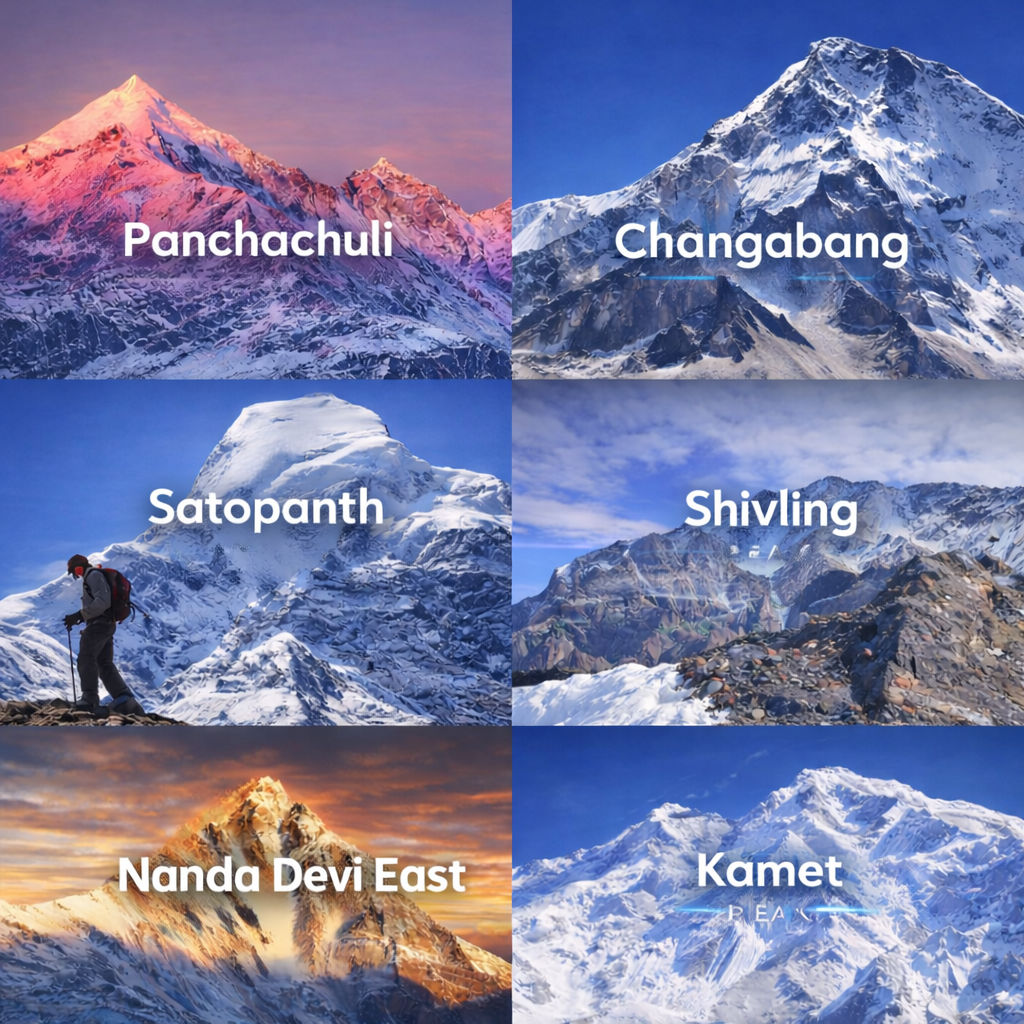
These peaks elevate world-class trekking and hiking experiences in Uttarakhand, from scenic walks to globally respected alpine challenges.
Adventure tourism has one of the strongest multiplier effects in the travel economy.
High Value, Low Volume Tourism
A religious tourist may spend ₹2,000 per day. A technical mountaineer or long-distance trekker often spends ₹10,000–₹15,000 per day over 30–40 days, creating sustained economic activity.
Gear and Equipment Ecosystem
The expansion of trekking and climbing routes will catalyze equipment rental hubs in Uttarkashi, Joshimath, and Munsiyari, mirroring successful models seen in Kathmandu’s Thamel district.
The convergence of government policy, fiscal investment, and environmental planning marks the beginning of a new era. World-class trekking and hiking experiences in Uttarakhand are shifting the state away from a Char Dham–centric tourism model toward a diversified, high-value alpine economy.
The real test lies in execution. Strict enforcement of Leave No Trace principles, guide certification standards, and carrying-capacity limits will determine whether Uttarakhand becomes a sustainable global benchmark or repeats the mistakes seen on overcrowded Himalayan routes elsewhere.

World-class trekking and hiking experiences in... Read More
The Gaumukh Tapovan trek is one... Read More

Camping tents have changed a lot... Read More


Join The Discussion